Design Concept
Timber-Anchored Neutral Layering
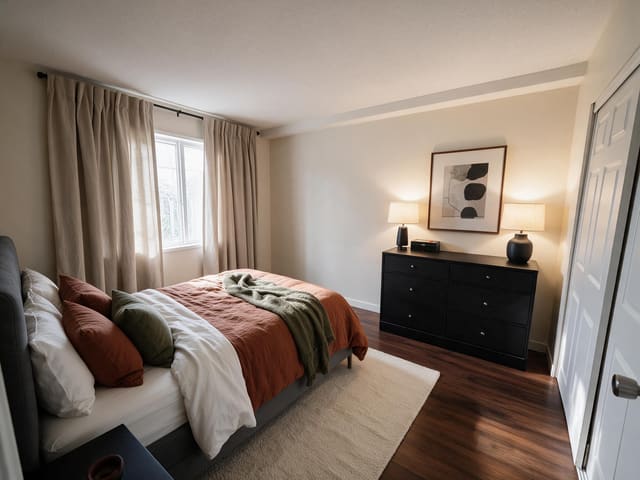
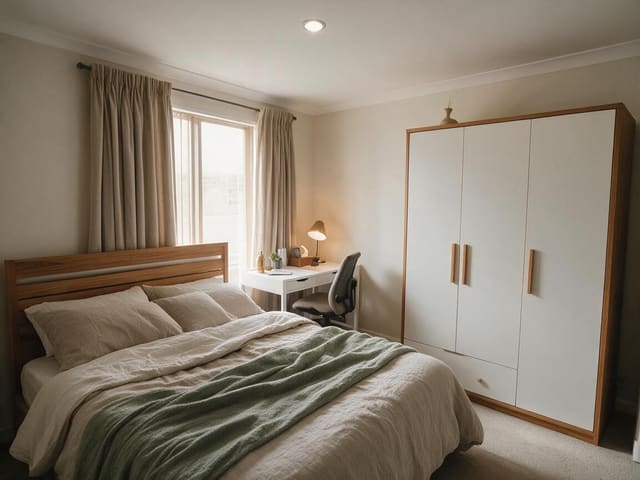
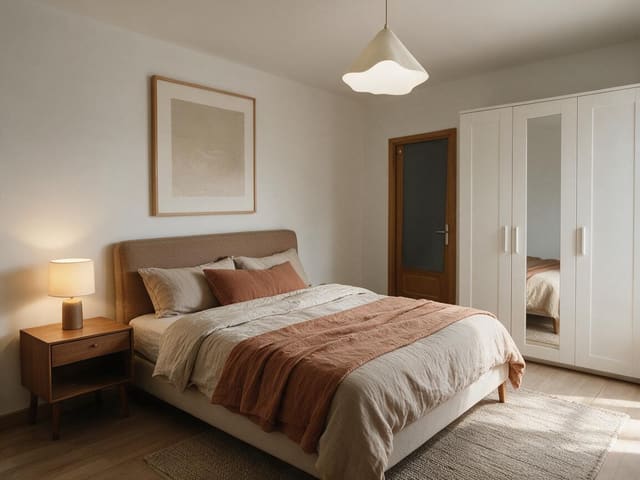
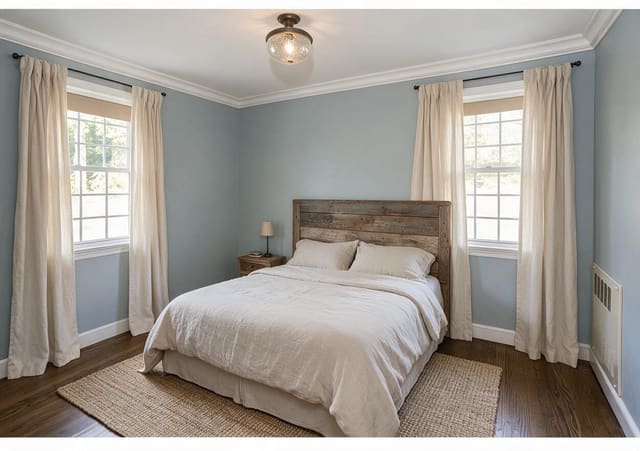
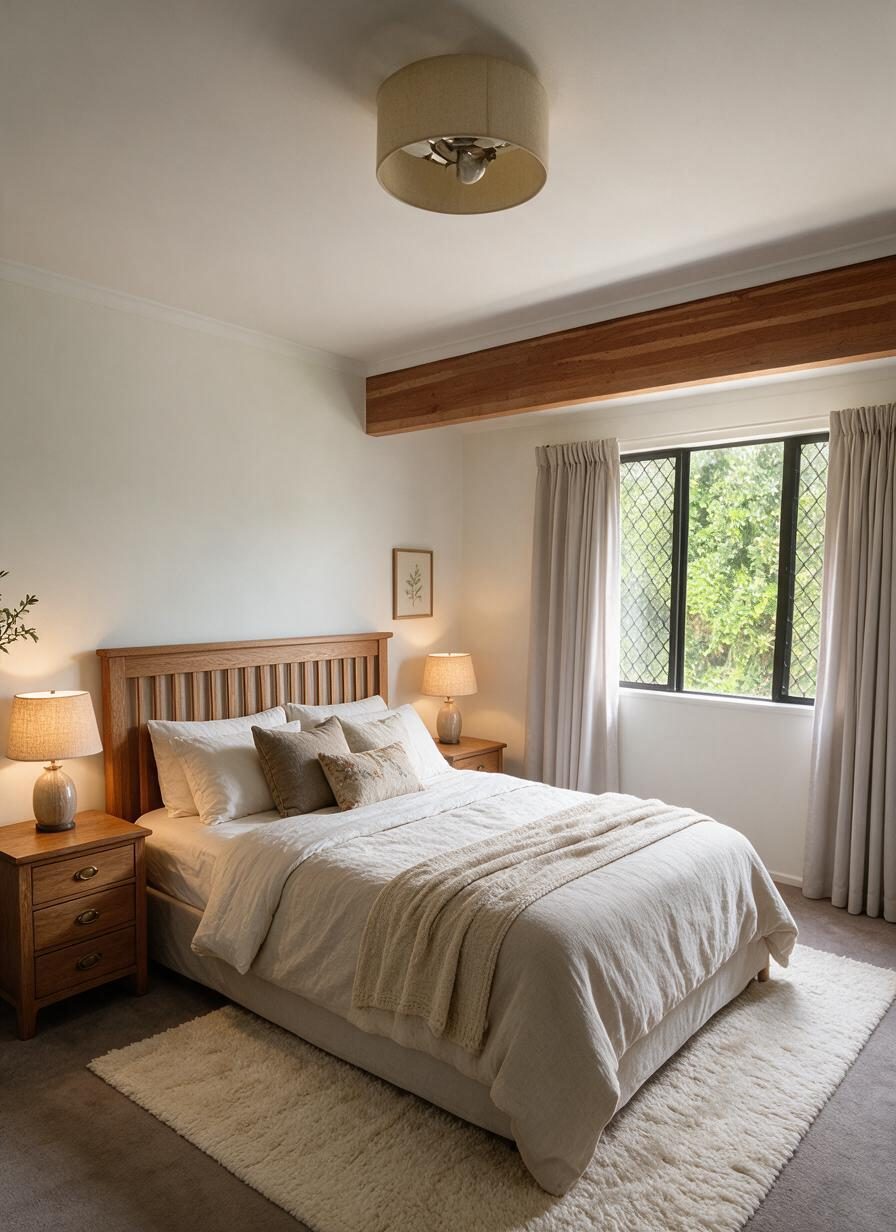
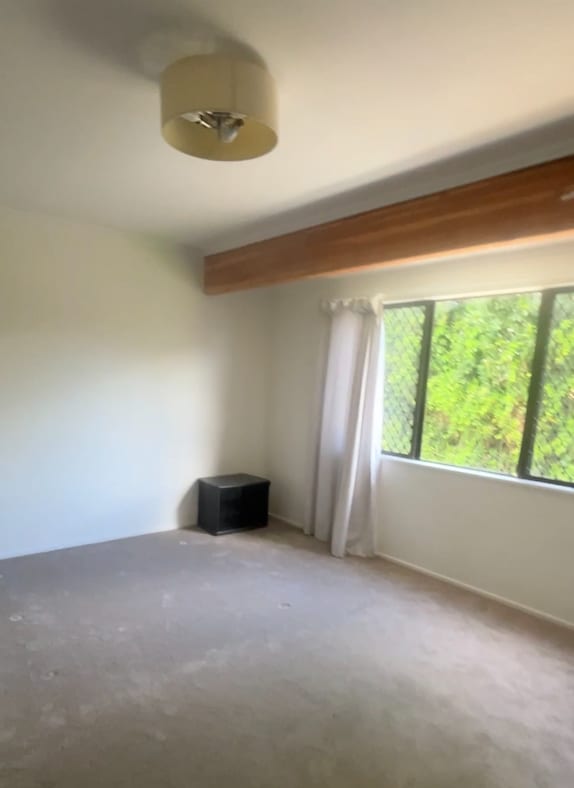
The central challenge was harmonizing the existing warm wood pelmet and ceiling beam with furnishings that feel intentional rather than incidental. The design intent uses a mid-tone timber bed and matching nightstands to echo the architectural wood, then layers cream, oatmeal, and sand textiles to soften the room without competing. The practical value lies in a restrained palette that calms the eye and adapts easily over time. Constraints included fixed walls, window, ceiling fixture location, and carpet flooring. The visible result is symmetrical bedside lighting, full-height drapery that extends the wall vertically, and bedding with enough texture to prevent flatness while maintaining serenity.
Key Decisions
- Queen bed with slatted timber headboard — repeats the window pelmet's warm wood tone, creating visual continuity across the room's longest wall.
- Matching timber nightstands with warm linen-shade lamps — establishes symmetry and pools of ambient light at sitting height for reading without overhead glare.
- Full-height neutral pinch-pleat drapery — frames the window, conceals the pelmet edge softly, and draws the eye upward to balance the horizontal beam.
- Plush cream area rug over carpet — defines the sleeping zone, adds underfoot luxury, and breaks up the floor's visual monotony without requiring hard flooring.
Material Plan
| Item | Role | Est. Price | Where to Buy |
|---|---|---|---|
| Slatted queen headboard, warm oak finish | Anchors the bed wall; echoes architectural wood | $280-450 | Wayfair, IKEA, Amazon |
| Pair 2-drawer timber nightstands | Symmetrical storage; matches headboard tone | $180-320 | Target, Walmart, Wayfair |
| Pair ceramic-base table lamps with linen drum shades | Bedside ambient lighting; warm ceramic texture | $60-120 each | Amazon, Target, IKEA |
| Full-height neutral blackout drapery panels | Softens window; vertical balance; light control | $80-160 | Amazon, IKEA, Wayfair |
| Plush cream shag/texture area rug (8x10) | Defines bed zone; tactile warmth over carpet | $150-280 | Wayfair, Amazon, Target |
| Layered bedding set: oatmeal duvet, cream coverlet, mixed throw pillows | Creates depth through tonal variation and texture | $120-220 | Target, IKEA, Amazon |
Budget Snapshot
| Category | Est. Cost |
|---|---|
| Bed frame & headboard | $280-450 |
| Nightstands & lighting | $300-560 |
| Textiles (drapery, rug, bedding) | $350-660 |
| Accessories & decor | $40-90 |
| Total estimated range | $970-1,760 |
Implementation Note
Position the rug so at least 18 inches extend beyond each side and the foot of the bed; too small a rug fragments the room visually. On existing carpet, avoid thick high-pile rugs that shift or create tripping hazards—opt for a dense, medium-pile weave with a thin non-slip pad beneath.