Design Concept
Tasman Oak Credenza Anchor
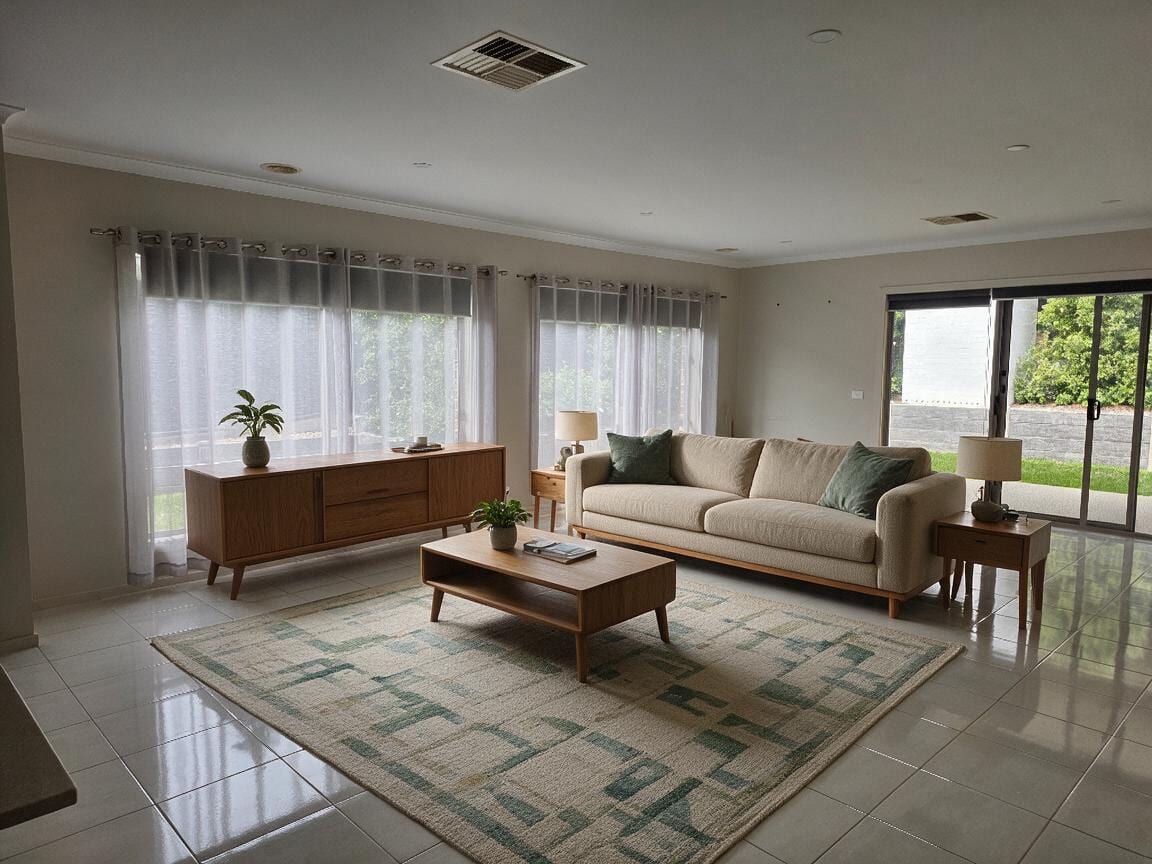
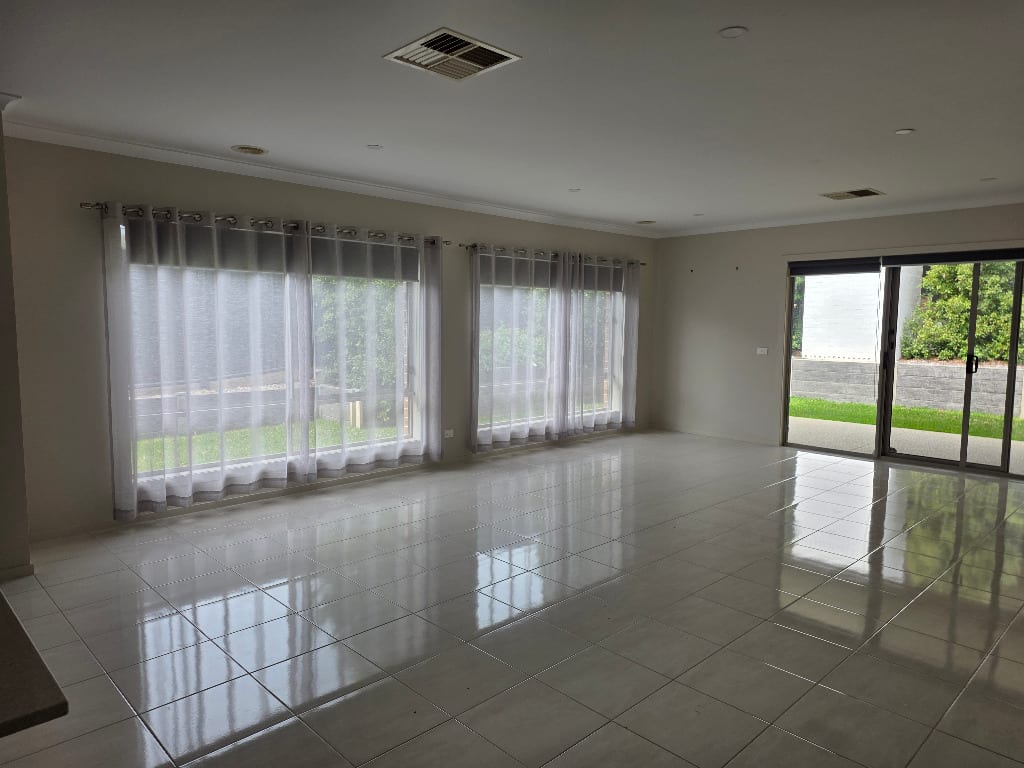
The room's central challenge was an open, tile-floored Living Room with no natural focal point and significant acoustic harshness. The design intent was to create a grounded, symmetrical seating zone that reads as one intentional gesture. A long Tasman oak credenza establishes the visual anchor on the window wall, its horizontal grain echoing the sofa's timber base and the pair of matching side tables. Sage-green cushions and a low-pile geometric rug with teal motifs introduce the requested cool accent without overwhelming the neutral shell. The practical value is immediate livability: defined zones, softer acoustics, and clear circulation paths to the sliding garden door. Constraints included preserving all openings, the ceiling with its existing vents and downlights, and the reflective tile flooring.
Key Decisions
- Credenza opposite windows — draws natural light across the oak grain and provides concealed storage for a clutter-free sightline.
- Low-profile sofa with exposed oak legs — maintains visual airiness and allows the rug pattern to remain visible beneath, critical in a low-contrast palette.
- Matching pair of side tables with drum shades — creates rhythmic symmetry and distributes ambient light evenly for evening use.
- Large geometric area rug — absorbs sound on tile, defines the seating island, and carries the sage-teal accent at floor level where it won't compete with garden views.
Material Plan
| Item | Role | Est. Price | Where to Buy |
|---|---|---|---|
| 3-seat beige sofa with oak legs | Primary seating; establishes neutral ground | $800-1,400 | Wayfair, IKEA (Kivik with oak replacement legs), Amazon |
| Tasman oak credenza (180cm) | Window-wall anchor; media and display storage | $400-750 | Wayfair, Temple & Webster via Amazon, Alibaba |
| Geometric low-pile area rug (200x290cm) | Zone definition; acoustic softening; color bridge | $120-250 | Target, Rugs USA, Temu |
| Pair of oak side tables with drawers | Flanking symmetry; lamp and beverage landing | $150-280 for pair | Walmart, Wayfair, IKEA (stock or hack) |
| Ceramic table lamp with natural linen shade (x2) | Warm evening layers; repetition for rhythm | $60-120 each | Target, Amazon Basics, IKEA |
| Potted greenery (faux or live) | Softening vertical accents; life on hard surfaces | $25-60 | IKEA, Target, local nursery |
Budget Snapshot
| Category | Est. Cost |
|---|---|
| Core furniture (sofa, credenza, tables) | $1,350-2,430 |
| Textiles (rug, cushions if adding) | $120-310 |
| Lighting (pair of table lamps) | $120-240 |
| Accessories and greenery | $50-120 |
| Total | $1,640-3,100 |
Implementation Note
Measure the sofa's leg height before purchasing; many affordable beige sofas ship with dark or metallic legs that disrupt the Tasman oak continuity. Replacement oak legs are widely available for $30-60 and install with a standard screwdriver in minutes.