
AI Home Decor Ideas: Choose Interior Styles for Every Room
Explore AI home decor ideas for living rooms, bedrooms, kitchens, and workspaces, with style tips for using Roomagic to plan a better interior.
Choosing home decor is harder than it looks. A room can have nice furniture and still feel unfinished. A color can look beautiful online and feel flat at home. A style can be appealing in a showroom but too cold, too busy, or too formal for everyday life.
AI home decor tools can help because they let you test the overall direction before you buy. Instead of collecting separate inspiration images and hoping they translate to your room, you can upload a photo of your own space and preview different interior styles in context.
Roomagic is built for that early design exploration stage. You can test a Modern living room, a Japandi bedroom, a Scandinavian kitchen, or a Minimalist home office from the same room photo. The goal is not to copy the AI result exactly. The goal is to understand what kind of decor, color palette, lighting, and furniture language feels right for your home.
Start with the feeling you want
Good decor starts with a feeling, not a shopping list. Before choosing a style, ask what the room should do for you. Should it feel calm after work? Bright and social for family time? Warm and layered for reading? Clean and focused for remote work?
That emotional goal should guide the design direction:
- Minimalist decor works when you want fewer distractions and cleaner surfaces.
- Scandinavian decor works when you want light, comfort, and everyday practicality.
- Japandi decor works when you want calm, warm neutrals, and natural materials.
- Modern decor works when you want a more polished room with cleaner lines.
- Industrial decor works when you want contrast, texture, and stronger materials.
When you test these styles with AI home decor, pay attention to more than whether the image looks good. Ask whether the room feels like a place you would actually use. A dramatic style may be exciting in a rendering but tiring in a bedroom. A very minimal style may look clean but feel too empty for a family living room.
Use AI space decoration to compare decor decisions
AI space decoration is not only about replacing furniture. It can help you compare the design decisions that make a room feel cohesive: wall color, flooring tone, rug size, art placement, lighting temperature, plant use, textiles, metal finishes, and the shape of major furniture pieces.
For a living room, you might compare a warm neutral palette with a bolder modern design. For a bedroom, you might test softer lighting, calmer bedding, and wood accents. For a workspace, you might explore cleaner storage, a more focused desk wall, and a background that looks better on video calls.
This kind of comparison is especially helpful because decor mistakes often happen at the system level. A rug may be fine, but not with that sofa. A wall color may be fine, but not with that floor. A lamp may be attractive, but not if the room already has too many competing shapes. AI room design lets you evaluate the whole room direction before buying one piece at a time.
If you want to understand what Roomagic can generate, review the AI interior design feature overview. To see public examples from other room types, visit Explore.
Decor ideas by room
Each room has a different job, so the best AI home decor ideas depend on the space.
For living rooms, focus on seating, flow, and the main focal point. A strong living room concept usually has a clear conversation area, a balanced media wall or fireplace wall, and lighting that works at night. Try generating a lighter version, a warmer version, and a more modern version, then compare which one feels most livable.
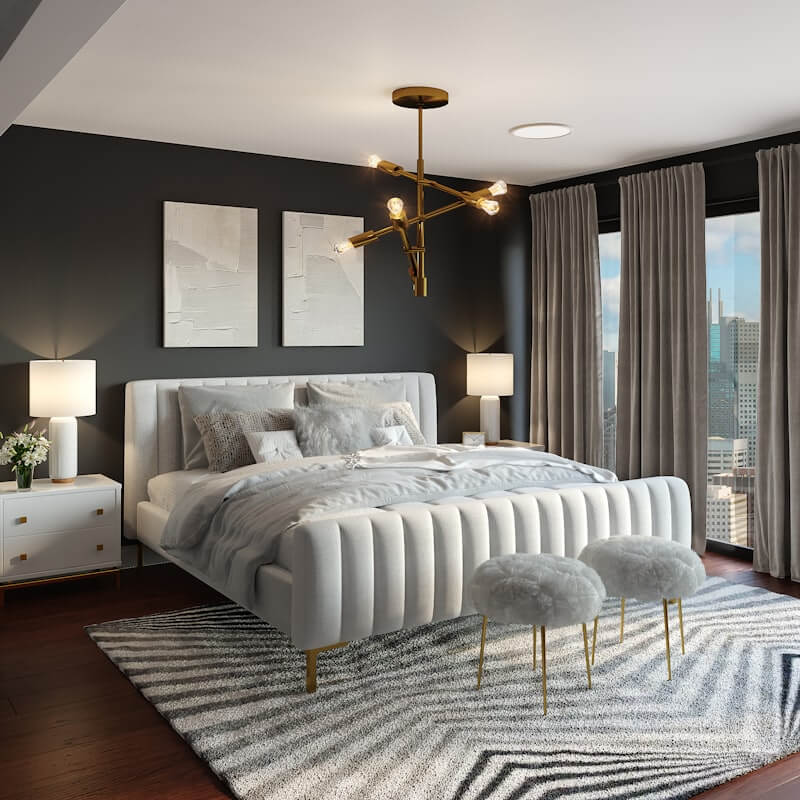
For bedrooms, prioritize calm. Bedding, wall color, nightstands, lighting, and window treatments matter more than decorative complexity. AI decor ideas can help you test whether the room should feel hotel-like, cozy, minimal, warm, or dramatic.
For kitchens and dining rooms, materials become more important. Cabinet tone, countertops, backsplash, flooring, and pendant lighting can change the whole impression. Even if you are not renovating immediately, an AI concept can help you understand which direction is worth saving for.
For home offices, think about focus and background. Many people want a workspace that looks good on video calls but still feels comfortable for long hours. AI space decoration can help you test shelving, wall color, desk placement, and lighting direction.
How to avoid generic AI-looking decor
The best AI home decor results still need human judgment. If a design looks too perfect, too empty, or too staged, use it as a direction rather than a literal shopping list. Real homes need texture, storage, personal items, and signs of daily life.
Look for ideas you can actually act on: a better color palette, a cleaner furniture layout, a new lighting direction, or a material combination that fits your taste. Save the strongest concepts and ignore details that do not match your budget, lifestyle, or room size.
You can also run several versions of the same room. One pass may show a strong layout. Another may show better lighting. A third may have the right color palette. The final plan can combine the best parts.
Turn style inspiration into a clearer plan
The biggest benefit of AI home decor is not speed alone. It is clarity. You can move from "I want this room to feel better" to a more specific direction: warmer wood, lighter walls, lower furniture, fewer high-contrast pieces, better lighting, or a calmer bedroom palette.
That clarity makes the next step easier. You can use the concept as a reference for shopping, contractor conversations, renovation planning, or a simple weekend room refresh. When you are ready to generate designs for your own room, check the current options on Pricing and start with a clear photo of the space you want to improve.