
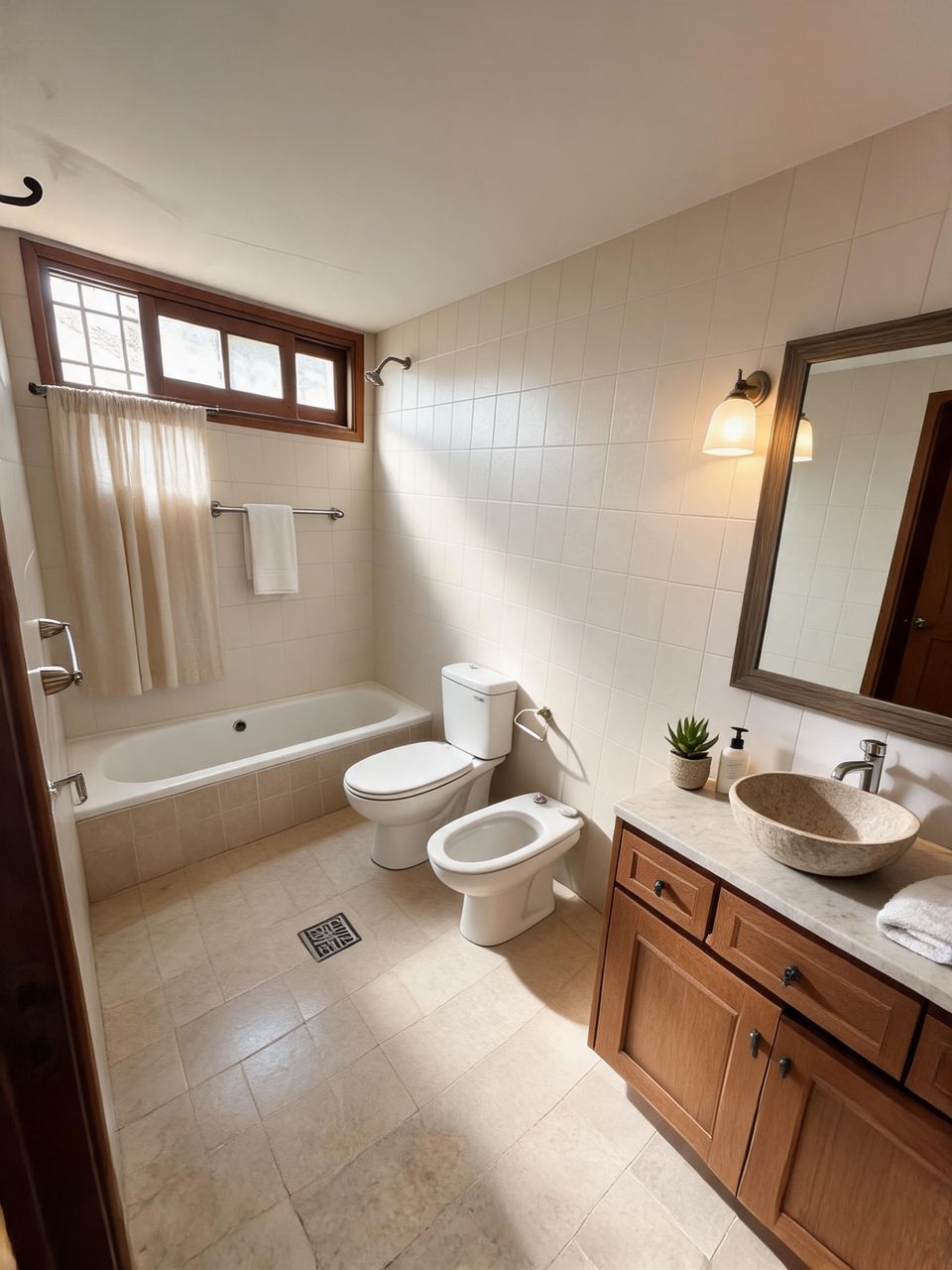
Small Bathroom Remodel Before and After: Budget Ideas That Keep the Layout
Compare budget small bathroom before-and-after ideas: keep plumbing locations, prioritize paint, lighting and storage, and separate a cosmetic refresh from renovation.
A budget small bathroom makeover starts with keeping a working layout and choosing a few visible changes together. If the tub, toilet, vanity, and tiled surfaces are sound, begin with cleaning, storage, textiles, mirror proportions, and lighting. Replacing fixtures or opening wet-area walls belongs in a separate renovation budget.
The useful before-and-after question is: what makes this bathroom feel dated, dark, or crowded, and which changes address that problem? A new vanity will not solve poor ventilation. A beautiful tile pattern will not create storage. Start with the problem you can see and the condition you can verify.
You can use AI bathroom design to compare ideas from your own photo before choosing a direction. The examples below pair real source photos with AI-generated concepts; they are planning studies, with no claim of completed construction or actual project spending.
Budget small bathroom before-and-after changes to compare
Keep the proposed change small enough to price. For each part of the room, record what stays and what changes before collecting materials.
| Before problem | Budget-conscious after direction | What to keep or check |
|---|---|---|
| Bottles cover the vanity and tub edge | Group daily items and add a compact closed organizer | Keep the basin usable and the floor drain accessible |
| Several towel colors and a busy curtain compete | Use one curtain and a coordinated towel palette | Keep existing fixtures and check curtain dimensions |
| The room feels dim around the mirror | Clean the mirror, check existing bulbs, and compare a lighter surrounding palette | A new wired light needs an installation allowance |
| Sound wall finishes look visually disconnected | Test a paint color that works with the existing tile on suitable dry walls | Keep paint and ordinary adhesive products out of areas they are not rated for |
| A functioning vanity looks tired | Compare new pulls or a suitable refinishing system | Match existing hole spacing and assess the cabinet substrate |
| Everyday storage blocks movement | Use the space inside the vanity more efficiently | Check door swing and avoid a new cabinet in the walking route |
These changes can make the room read more coherently without moving plumbing. If the photo shows water damage, loose tile, or a leaking fixture, investigate the condition before choosing decorative updates.
A real-photo bathroom example: keep the positions, compare the scope
This transitional guest bathroom concept is useful for comparing what remains recognizable and what creates additional work.
Before: a compact room with mixed finishes
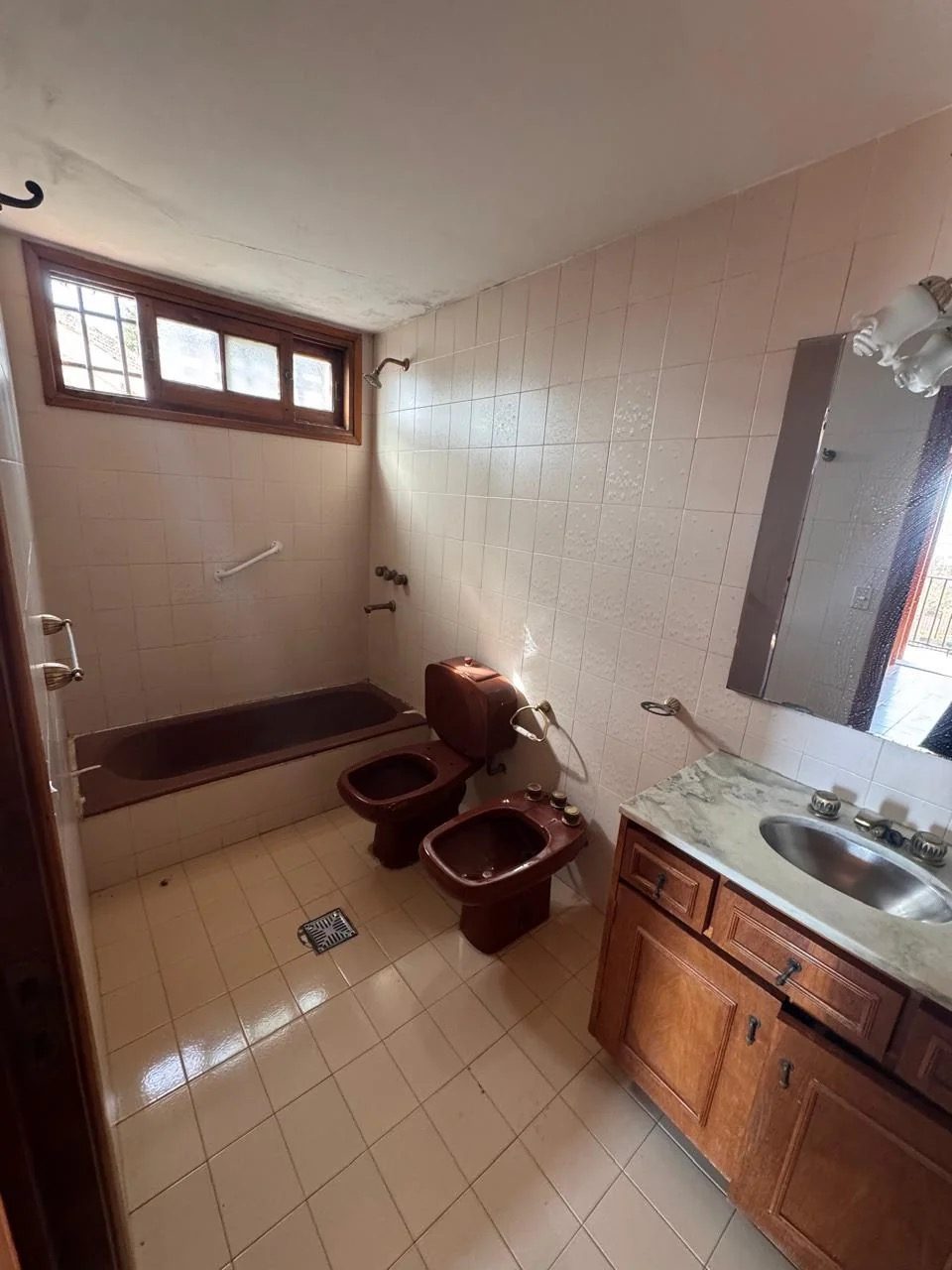
The source has a high window over the tub, a toilet and bidet beside it, and a wood vanity on the right. Brown sanitaryware, pale tile, the countertop, and wood trim create several competing material tones in a small view.
After: a brighter AI concept within the same room
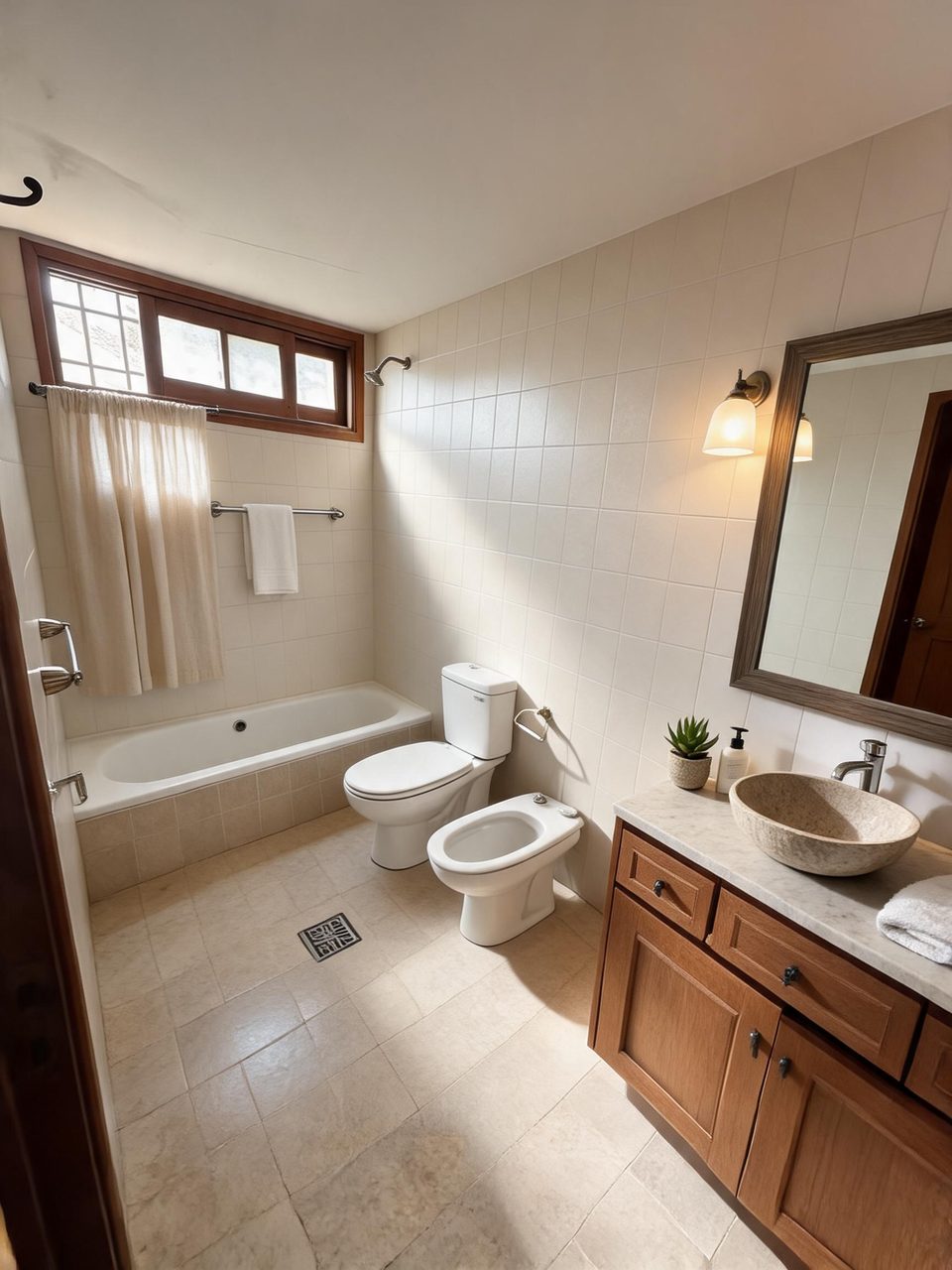
The window, tub position, toilet-and-bidet arrangement, and vanity location remain recognizable. The concept introduces lighter sanitaryware, different floor and surface finishes, a vessel basin, a framed mirror, a light, and a curtain.
Keeping positions can avoid the work associated with moving them, but this image still depicts fixture and finish changes. Copying the entire after image requires separate material and installation quotes. The stone-look surfaces and new fixtures are outside the scope of a textiles-and-storage refresh.
| Read from the concept | A smaller first phase | A separately priced upgrade |
|---|---|---|
| More consistent pale colors | Coordinate towels, curtain, and accessories around existing tile | Change tile or sanitaryware |
| Clearer vanity focal point | Reduce countertop clutter and compare mirror proportions | Replace the basin, countertop, or wired light |
| Warmer wood and neutral balance | Retain sound wood elements and test compatible dry-wall colors | Refinish or replace cabinetry if its condition requires it |
Use the case's before-and-after viewer to inspect these distinctions. Its design-report estimates are preliminary guidance, rather than invoices or a contractor quote for your bathroom.
How to plan a small bathroom makeover with a fixed budget
Separate a spending limit from a price prediction. The following $500 example is a set of spending caps for a cosmetic shopping plan, assuming sound existing fixtures and no hired labor. It does not price the illustrated renovation.
| Allocation | Maximum allowance in this example |
|---|---|
| Suitable dry-wall paint and preparation supplies, if needed | $100 |
| Shower curtain, towels, and washable mat | $100 |
| Compact organizers and replacement cabinet pulls | $75 |
| One priority item, such as a mirror, including suitable mounting supplies | $125 |
| Unspent reserve for tax, delivery, or small surprises | $100 |
| Total spending ceiling | $500 |
Check the actual item quantities and prices before ordering. If the mirror and mounting work exceed the allowance, retain the existing mirror or reduce another purchase. Exclude the paint allowance if all exposed walls are tiled or you rent without painting permission.
Plumbing, electrical work, waterproofing, tile installation, fixture replacement, and repairs need their own quotes. If those are required, revise the scope and total before treating this as a workable budget.
Photograph, preview, and turn the result into a shopping plan
- Photograph the room from the doorway with the floor, window, vanity, toilet, and tub or shower visible. Take another view if an important area is hidden.
- Write down what must stay: fixture positions, tub, toilet, vanity, tile, and any accessibility features. Specify the few items you are considering changing.
- Upload the photo to Roomagic's bathroom design tool. Begin with a cosmetic direction that suits the existing finishes.
- Compare the result with the source. Check that openings, fixture positions, and clear floor space remain recognizable; discard a concept that changes a required element.
- List only the visible changes you actually intend to buy. Measure, check product suitability, and obtain installation quotes where needed.
An AI preview can help compare a curtain, palette, or mirror direction. It cannot confirm hidden pipework, waterproofing, or fixture dimensions. The broader bathroom remodel ideas guide covers the additional decisions involved in a larger project.
What makes a small bathroom after image convincing?
A convincing concept still looks like the same bathroom. The room should not become wider, acquire a new window, or lose a fixture merely to look cleaner. A mirror should reflect plausible features, and new storage should not block a door or the usable space beside the toilet.
Check the scale of every purchase outside the image. A vessel basin changes the combined cabinet-and-basin height; a large mirror can conflict with fittings. Keep necessary accessibility features unless a qualified plan provides a suitable replacement.
For another room, the budget small kitchen before-and-after guide uses the same keep-or-change decision. A budget living room makeover has a different cost structure because most changes involve movable furnishings.
FAQ
What is the cheapest way to update a small bathroom?
Start with cleaning, organizing, and coordinating items you already own. If the room and fixtures are sound, new textiles, compatible cabinet pulls, and suitable paint on dry walls can be a smaller project than replacing tile, a vanity, or a tub.
Can I remodel a small bathroom without moving plumbing?
Yes, many refreshes and fixture updates can retain existing positions. Keeping a position does not eliminate plumbing work: changing a basin, faucet, toilet, or tub can still require connections, compatibility checks, and installation.
Is $500 enough for a small bathroom makeover?
A $500 spending cap may support selected cosmetic purchases if the existing room works and labor is excluded. It does not establish a budget for a full remodel. Price your specific items, keep a reserve, and narrow the scope if quotes exceed the cap.
Can I keep old bathroom tile and still improve the look?
If the tile is sound, compare textiles, storage, mirror framing, lighting, and suitable dry-wall colors around it. Inspect damaged or persistently damp areas before covering them. Surface condition matters more than whether the tile looks fashionable.
Can Roomagic show a small bathroom before-and-after idea?
Yes. Upload a real bathroom photo and describe what should stay and what may change. Review the generated concept against the source, then verify dimensions, product suitability, and installation before buying. New accounts receive 30 credits; the pricing page explains generation costs, and the free-credits program has separate participation requirements.