
Living Room Makeover Before and After on a Budget: What to Keep and Change
Plan a budget living room makeover with before-and-after ideas for curtains, paint, lighting and furniture. See a real-photo AI concept and build a phased shopping plan.
A budget living room makeover starts by identifying the useful furniture and fixed finishes you already have. Keep those, then coordinate a smaller set of changes: layout, curtains, lighting, wall color, and a few textiles. Replacing every visible item can make an after image dramatic while making the shopping list much larger than necessary.
Before buying anything, name the main problem. Is the seating awkward, the window treatment heavy, the lighting uneven, or the palette disconnected? Solve that problem first so the budget goes toward changes you will notice every day.
With AI living room design, you can compare directions from your own room photo. This guide includes a real source photo and an AI-generated after concept, then separates what the image demonstrates from what a smaller makeover could actually include.
Budget living room before-and-after ideas
The strongest starting point is often a decision about what stays. A comfortable sofa, sound carpet, brick fireplace, or useful built-in shelves can anchor the new direction.
| Before problem | After direction to test | Budget decision |
|---|---|---|
| Furniture leaves no clear route across the room | Reposition existing seating into one usable group | Measure routes and door swings before buying more seating |
| Several colors compete with the sofa and floor | Repeat two supporting colors in curtains and textiles | Select colors around retained pieces |
| Heavy curtains hide daylight | Compare simpler panels that can stack clear of the glass | Check the rod, panel width, privacy, and radiator position |
| One overhead light leaves the reading seat dim | Add or relocate a plug-in reading lamp | Use existing outlets and account for a safe cord route |
| Small decorative items cover every surface | Edit accessories and group a few useful objects | Try a no-buy arrangement before purchasing organizers |
| Walls feel yellow beside gray carpet | Test a less yellow warm neutral with a physical sample | Confirm the sample in daytime and evening light |
You do not need to change all six at once. If furniture placement is the main problem, a new rug will not fix an oversized sofa. If the layout works, curtain and lighting changes may be a more useful first phase.
A real-photo living room makeover: retain the fixed finishes
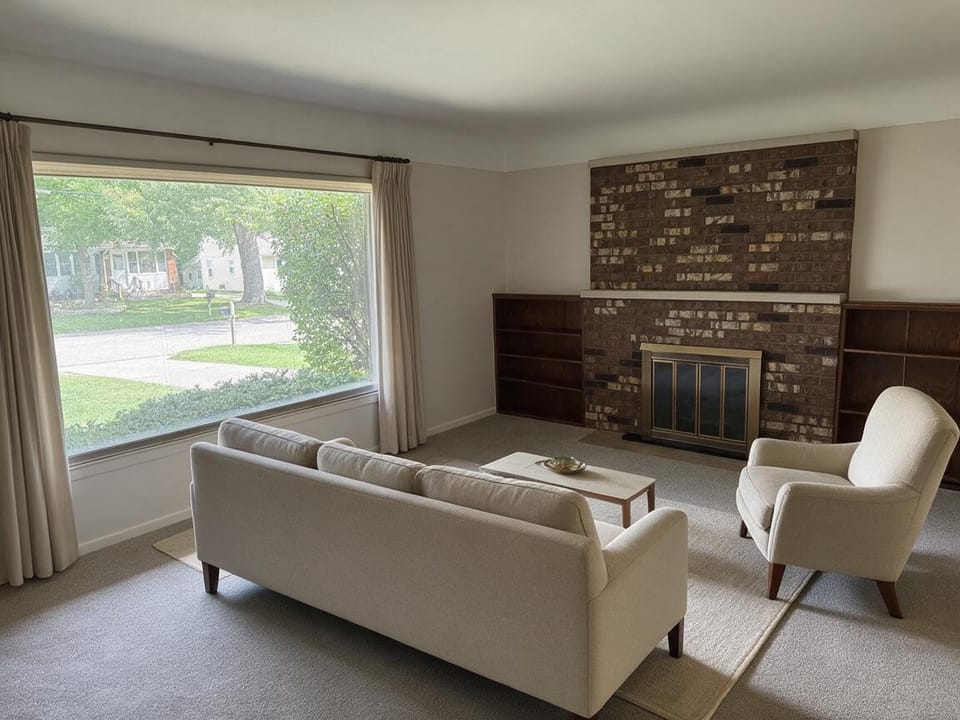
This transitional living room concept shows how an existing room can support a more coherent direction without rebuilding the fireplace or replacing the carpet.
Before: an empty room with strong existing features
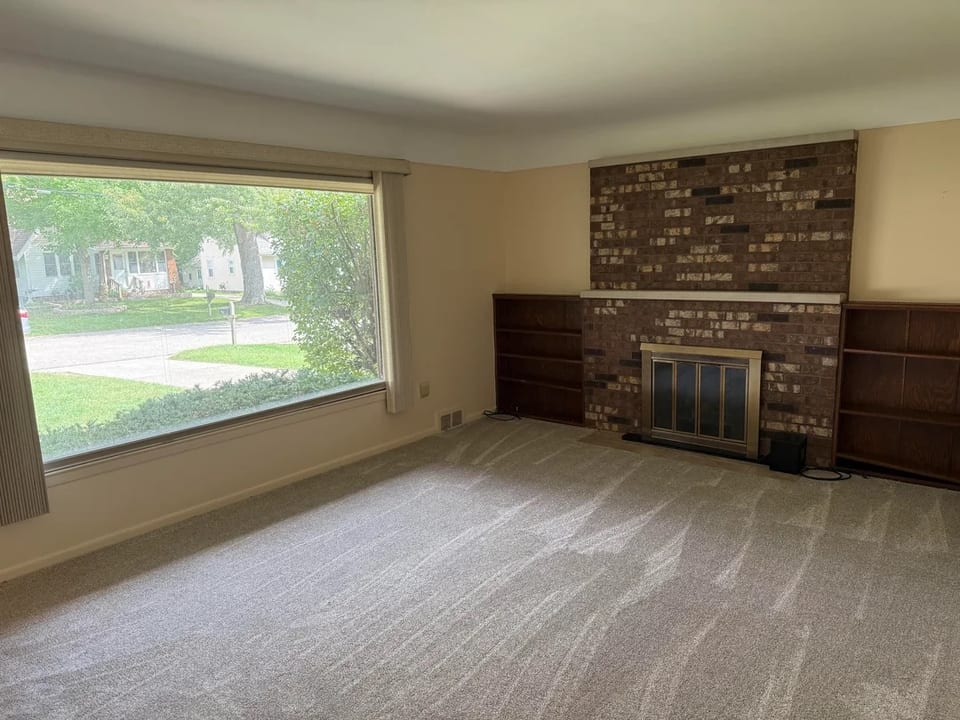
The original photo contains a wide picture window, an exposed brick fireplace with a brass-toned screen, built-in wood shelves, and gray carpet. The room is empty, so the source does not show an existing sofa being retained.
After: an AI concept with a defined seating group
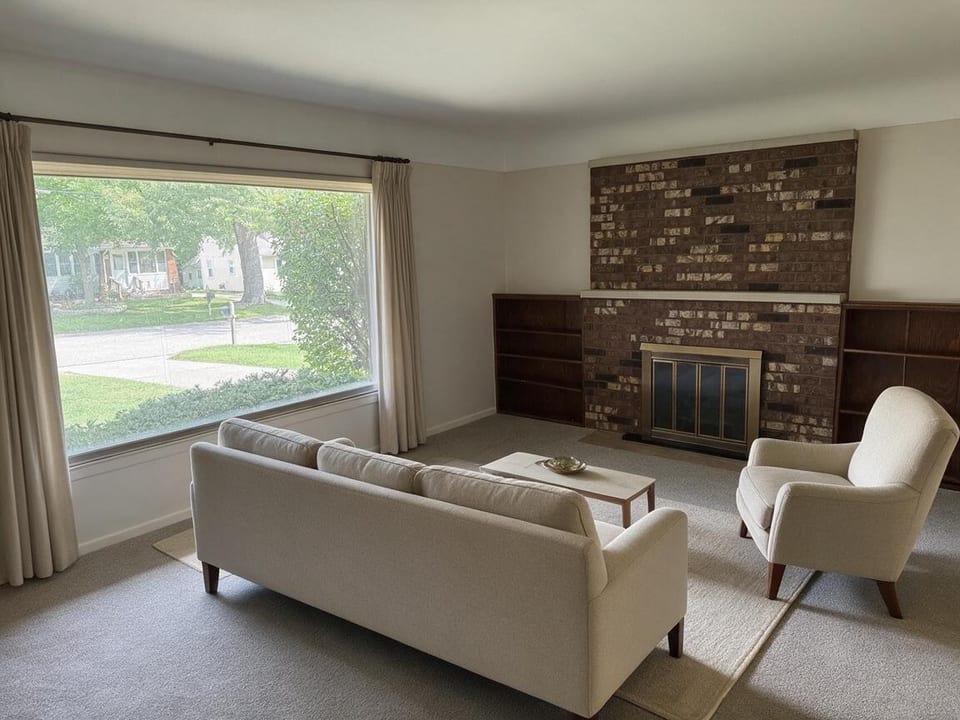
The picture window, brick fireplace, shelves, carpet, and room boundaries remain recognizable. Lighter full-length curtains and a paler wall direction reduce the yellow cast, while a sofa, armchair, table, and rug establish a seating area facing the fireplace.
The useful budget lesson is to work around the expensive fixed finishes. The concept also adds furniture, so recreating it in an empty room requires a furnishing budget. If your own room already has usable seating, preview the color and curtain direction around that seating rather than copying the entire shopping list.
| Element in this case | What the images show | What to check in your room |
|---|---|---|
| Fireplace | Existing brick and screen remain recognizable | Condition and safe clearances around the hearth |
| Floor | Gray carpet remains, with a rug added over it | Whether your existing flooring needs cleaning or repair |
| Window | Original picture window remains; treatment changes | Measurements, daylight, privacy, and mounting position |
| Seating | A group is added to an empty room | Which existing pieces fit the intended layout |
| Walls | A less yellow neutral direction | Paint quantity, preparation, and real sample colors |
This is a visualization, with no documented completed-project cost. The full case includes preliminary material guidance; use local prices and measured quantities for your own plan.
Choose a budget level before choosing a style
A budget makeover can mean several different scopes. Decide which one you need so a low-cost refresh does not quietly become a fully furnished room.
| Scope | Suitable starting condition | What belongs in the plan |
|---|---|---|
| No-buy reset | Furniture and furnishings are usable | Rearranging, cleaning, editing accessories, moving existing lamps |
| Cosmetic refresh | Layout works but the look feels disconnected | Selected curtains, paint, lighting, textiles, or art |
| Furnishing an empty room | Major seating and tables are missing | A separate list of required furniture, delivery, and assembly |
| Repair or renovation | Flooring, fittings, or building elements need work | Condition assessment and trade quotes before decorating |
For a small living room, put usable floor space ahead of an additional chair. Test the furniture outline on the floor with tape, and check the room from more than the photograph's viewpoint. The small-space room design guide expands on scale and storage decisions.
A $500 living room refresh spending plan
The following $500 example allocates spending caps, assuming you retain your main seating and flooring and do the permitted preparation yourself. It is a planning exercise, rather than a retail-price survey or the cost of the illustrated room.
| Allocation | Maximum allowance in this example |
|---|---|
| Paint and preparation supplies, if needed | $125 |
| Curtain panels and compatible mounting hardware | $125 |
| One plug-in lamp and suitable bulb | $75 |
| Cushion covers, throw, or one piece of wall decor | $75 |
| Reserve for tax, delivery, or missing supplies | $100 |
| Total spending ceiling | $500 |
Use actual quantities before committing to the table. A room with several large windows may need more curtains than this allowance supports. If your wall color already works, move that allowance to the highest-priority item or keep it unspent.
This plan excludes new sofas, armchairs, flooring, fireplace work, hired painting, and electrical installation. Price those separately if they are part of your project. For renters, use the renter-friendly makeover guide to choose changes compatible with your lease and available permissions.
Preview the same room before buying furniture or paint
- Take a photo that shows the main seating, floor, window, and focal point. Keep the camera level and retain a second view of any hidden route.
- List the pieces that must stay, including their colors and approximate dimensions. Identify one main change, such as curtains and wall color.
- Upload the photo to Roomagic and compare a limited number of coherent directions. Start with retained furniture and fixed room features.
- Compare each concept against the source. Reject a version that removes a required sofa, invents an opening, or makes the room larger.
- Measure the intended purchases, obtain paint samples, and put prices beside the selected changes. Buy the priority items first, then reassess the room.
An AI image helps compare the relationship between finishes. It does not establish an exact paint match or furniture size. For photographing and evaluating a full room, continue with AI living room design from a photo.
Make the before-and-after comparison useful
Keep the camera position similar when recording the actual finished room. Photograph in comparable light so an overexposed after image does not become your evidence of better design.
Write down which changes happened and which purchases were deferred. If you publish your own completed makeover, distinguish receipts and labor costs from planned allowances. A clear account of retained items is often more useful to another homeowner than a dramatic photograph alone.
For related budget decisions, see small kitchen remodel before and after and small bathroom budget makeover ideas. Each room has different constraints even when the planning sequence is similar.
FAQ
What is the cheapest way to make over a living room?
Start with a no-buy reset: clean, rearrange usable furniture, edit visible clutter, and relocate existing lamps or textiles. Then choose the one purchased change that addresses the main problem, such as curtains, a reading light, or suitable wall paint.
Can I update a living room without replacing the sofa?
Yes, if the sofa is comfortable, sound, and appropriately sized. Choose supporting colors around it and compare curtains, cushions, lighting, and wall color. If it blocks a route, check placement and dimensions before assuming accessories will solve the problem.
Is $500 enough for a living room makeover?
A $500 cap can guide a selected cosmetic refresh when seating and flooring are retained. It is not a furnishing budget for every empty room. Check actual quantities, tax, delivery, preparation, and any hired labor before ordering.
Do I need to paint a brick fireplace to modernize the room?
No. The illustrated concept retains the brick and changes the surrounding palette and furnishings. First compare those smaller changes. Any fireplace work needs an assessment of the materials, condition, and appropriate treatment.
Can Roomagic preview my own living room before-and-after idea?
Yes. Upload a photo and describe what should remain and what you want to test. Compare the generated image with the source before using it as a shopping direction. New accounts receive 30 credits; see pricing for generation costs or the separate free-credits program for participation requirements.